Forma Labs Technologies
BUILT FOR PEOPLE. DESIGNING WHAT'S NEXT.
Building AI products designed for real life.
Forma Labs Technologies is an AI product company creating thoughtful software around real human needs. We bring together design, technology, and an understanding of everyday challenges to build products that help people make informed decisions, develop healthier habits, and navigate where and how they work. Our approach starts with people: their experiences, their goals, and the friction that gets in their way. From personal fitness to workplace culture, we turn those insights into practical tools that make complex information easier to understand and act on. Inside Forma Labs, we also test AI agents within our own operations, exploring how people and intelligent systems can work together. What we learn helps shape our products, with human judgment, accountability, and purpose guiding what we build.

OUR LAB
We test on ourselves first.
Forma Labs is building an agentic operating model inside its own company—one real bottleneck, one carefully defined role, and one human checkpoint at a time.
Not a demo. Not a hypothetical workflow. A company learning to operate with agents while the work is actually happening.
See how our Lab is evolving

The bottleneck
The bottleneck was not ambition. It was attention.
The first agent
A pile of receipts I never had time to log. That became the Finance Agent.

One bottleneck at a time
Each new role had to earn its place by reducing a specific friction.
The work was not clean
Some produced too much. Some needed stronger limits. The friction was the lesson.
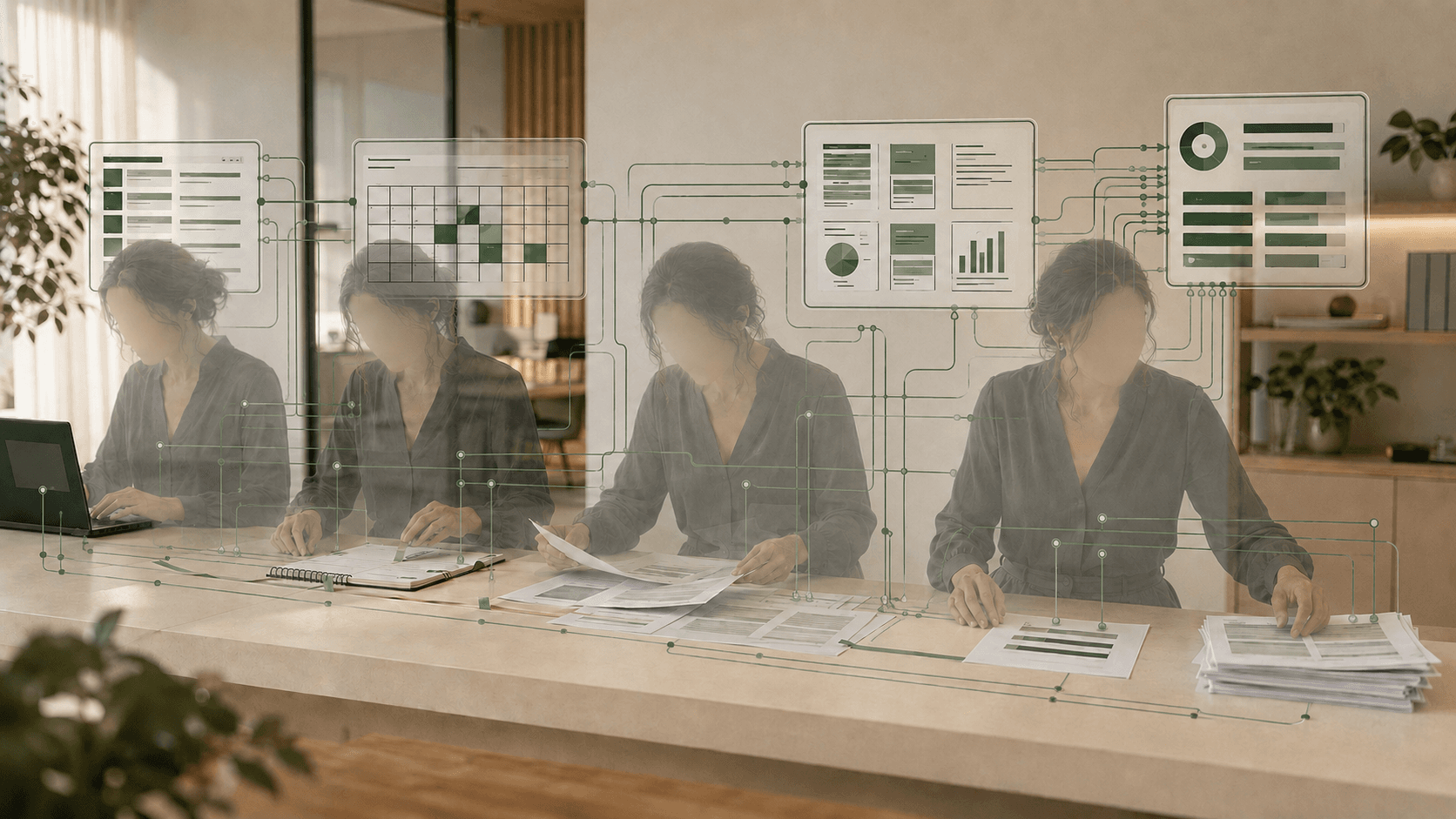
Meet Claudete
Six reports become one prioritized morning list. She is the only agent allowed to send.
Human in the loop
Every agent reports back to one accountable decision-maker.
- The bottleneck: The bottleneck was not ambition. It was attention.
- The first agent: A pile of receipts I never had time to log. That became the Finance Agent.
- One bottleneck at a time: Each new role had to earn its place by reducing a specific friction.
- The work was not clean: Some produced too much. Some needed stronger limits. The friction was the lesson.
- Meet Claudete: Six reports become one prioritized morning list. She is the only agent allowed to send.
- Human in the loop: Every agent reports back to one accountable decision-maker.
THE TURNING POINT
The products opened the door. Operations changed the question.
- 01
Belonga began with a question
Before accepting a job, how can someone understand what a company actually feels like from the inside? That frustration became the starting point for Belonga in February 2026.
- 02
The first concept was designed by hand
I designed Belonga's first concept myself in Figma. No AI was involved—only design instinct focused on a problem I had experienced often enough to want to solve.
- 03
in·Forma introduced a different challenge
My shoulders were giving me trouble, and I wanted to keep training without making things worse. My niece Isabella, a Fitness Consultant who had built her career through education and real coaching experience, and I began imagining guidance that could respond more thoughtfully to the person using it.
- 04
AI became more than a feature
The product work moved AI from something I was curious about to something I needed to understand deeply enough to use responsibly.
- 05
Then the question moved inside the company
Could the same discipline—begin with a real problem, define the role, test the response, and preserve human judgment—help Forma Labs operate more effectively?
Product question
How can AI respond to a user's real context?
Operational question
How can AI support work without obscuring responsibility?

The difficult part was not creating an agent. It was making the agents work together.
As the roles multiplied, fragmented outputs created a different kind of overload. The system needed priorities, handoffs, limits, and a clear path back to one accountable decision-maker.
Slack became the bridge between the human team and the agents—the place where work was already happening, not another destination to monitor.
Every two weeks, the team submits a progress report. An agent reviews the information and prepares an assessment. I discuss it, make the decision, and approve what moves forward. Only then does a recommendation return to the team.
The agents can organize, compare, draft, flag, and recommend. Authority remains with a person.
Monica in the loop. Always.
The decision loop
- 1Human team submits information
- 2Agent reviews and prepares
- 3Monica evaluates and decides
- 4Approved recommendation returns to the team
No consequential action crosses this line without human review.